
Arena Breakout: Infinite – High-Risk PvP Farming, Meta Discipline, and Loot Optimization Guide
Arena Breakout: Infinite is fundamentally a high-lethality extraction shooter where decision-making, audio discipline, and risk calibration matter as much as mechanical aim, and this is especially relevant when players are looking to scale progression or buy Arena Breakout: Infinite Koens to support high-tier loadouts. At higher-skill lobbies, especially in contested POIs like Motel, success is determined less by “perfect meta builds” and more by adaptive combat awareness, resource efficiency, and controlled aggression.
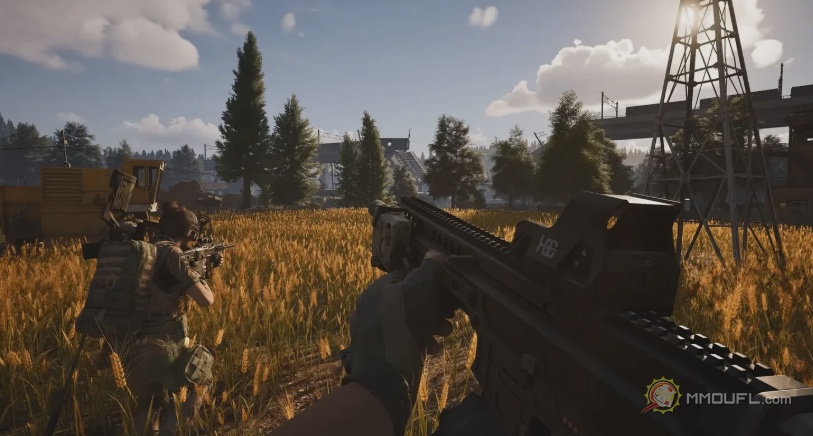
1. Meta vs. Non-Meta: Choosing Your Playstyle
The game’s meta loadouts exist for a reason: they minimize variance. High-penetration ammunition, thermal optics, and fully optimized armor sets are designed to win “sweat” lobbies where every opponent is similarly optimized. If you consistently queue into high-skill environments, running meta gear is effectively a statistical necessity.
However, experienced players often deviate from strict meta builds for two reasons: familiarity and cost efficiency. Once a player has deep map knowledge and strong PvP fundamentals, they can afford to experiment with unconventional weapons or hybrid kits. This creates flexibility in long raids where adaptability often outperforms rigid optimization.
The key principle is simple:
Meta reduces risk; skill replaces it.
2. Gacha Unlock System and Economic Planning
Arena Breakout: Infinite uses a deterministic gacha system for certain cosmetic or rare items, including knives and special bundle rewards. While the system involves rolling mechanics, it is not purely RNG-based in the traditional sense.
Each bundle has:
· A fixed maximum cost ceiling
· A probability distribution for early acquisition
· Transparent odds displayed in the item interface
This means players are never locked into infinite randomness. You will always obtain the item once the threshold is reached.
The optimal strategy is therefore economic expectation management:
· Assume worst-case cost (full pity threshold)
· Treat early pulls as bonus outcomes (<1% scenario)
· Never plan builds or purchases around lucky rolls
This approach prevents inefficient currency spending and reduces long-term resource volatility.
3. High-Level PvP Environments: Motel as a Case Study
Motel represents one of the most volatile PvP zones in the game due to its layered architecture, tight corridors, and multi-entry rotation paths. Engagements here are rarely isolated; instead, they cascade into multi-team collisions.
Key tactical principles for Motel:
· Audio stacking is critical; multiple gunshots often indicate overlapping team fights
· Third-party timing is more valuable than initial engagement
· Vertical and window-based angles create “soft traps” for rotating squads
· Smoke usage can be either defensive concealment or aggressive baiting
In high-tier lobbies, fights often evolve into chain eliminations where one engagement triggers multiple squads converging. This creates exponential loot opportunities—but also extreme risk exposure.
4. Weapon Selection and Ammunition Economy
High-tier ammunition (e.g., red-tier rounds like M61 equivalents) dramatically shifts engagement outcomes, especially against armored opponents. However, this creates a secondary economic layer: every shot carries measurable monetary value.
This introduces a unique constraint:
· Combat effectiveness increases with expensive ammo
· Profit margins decrease with excessive firing
Advanced players track approximate ammo expenditure per raid and compare it against expected loot returns. In highly successful runs, the ROI can exceed millions in in-game currency, but only if survival is maintained through disciplined positioning.
5. Thermal, Smoke, and Information Warfare
Thermal optics significantly alter engagement dynamics, especially when combined with smoke deployment. A common advanced tactic is thermal counter-peeking through smoke layers, allowing visibility advantage while opponents rely on audio alone.
This creates an information asymmetry loop:
· One team controls vision (thermal advantage)
· The other relies on prediction and sound cues
Counterplay requires disciplined repositioning rather than direct confrontation. Attempting to “out-peek” thermal setups in tight corridors is statistically disadvantageous unless supported by flanks or multi-angle pressure.
6. Loot Discipline and Inventory Optimization
High-value raids are not defined solely by kills but by extraction efficiency. Even when multiple squads are eliminated, success depends on:
· Bag space management
· Rig prioritization
· Weapon value vs. weight tradeoffs
· Extraction timing windows
A common high-level mistake is over-looting mid-extraction phase. Once extraction timers are active, the priority shifts from maximizing loot to minimizing loss probability. The optimal decision is often to leave high-value but low-efficiency items behind if they compromise extraction reliability.
7. Strategic Takeaway
Arena Breakout: Infinite rewards controlled aggression backed by systemic awareness. The strongest players are not those who always run meta gear or chase every fight, but those who understand when to escalate and when to disengage. In practice, this also ties into resource efficiency and long-term economy management, especially when players are trying to optimize value while preserving their bankroll or looking for ways to stretch cheap Arena Breakout: Infinite Koens across multiple raids. Motel-style raids exemplify this perfectly: chaotic, multi-team environments where situational awareness and timing produce exponentially higher rewards than raw mechanical dominance alone.
In practice, consistent high-value runs come from three pillars:
· Controlled aggression in high-density zones
· Strict economic awareness of ammo and gear costs
· Adaptive decision-making under multi-team pressure
Mastering these transforms raids from unpredictable chaos into repeatable, high-profit systems.
———— Jun-17-2026 PST ————